
NovusLens

See what a change affects, before you commit.

Changing a service can affect teams you never expected. NovusLens is a digital twin of your organisation. It maps your teams, systems, suppliers and AI agents, with the evidence behind each connection. Novus-i2’s advisers help you interpret what it shows.

NovusLens Product Overview7:31 running time, with English captionsThe Product Overview follows one service change through NovusLens, from the first question to a recorded decision. Generated voices narrate it.

The organisation and the service change in the film are fictional.Opening photograph by stephen cubitt on Unsplash.

01 / The problem

One question, followed through this page.

If we change this service, who else is affected?

Imagine your organisation is replacing a customer service system. The organisation chart names the teams and their reporting lines. It does not show who waits on whom.

Operations relies on a data team. That team depends on a supplier. An AI agent also uses the service. Their records sit in different places, and each describes only part of the picture.

Before changing anything, you need to see those relationships and who answers for them. This example is fictional, and it runs through the rest of the page.

02 / The solution

One inspectable model of how work connects.

NovusLens brings your teams, systems, suppliers and AI agents into one model you can inspect: the twin. Each connection shows that one part needs something from another.

Select a team or service to see its recorded owner, its dependencies and the evidence behind each one. In our example, selecting the data team shows who answers for it. It also shows the team’s links to customer service and the supplier.

The twin reflects the records supplied to it. Missing information stays visible as a question to investigate.

  • Recorded owner

    The person recorded as answering for the team, kept apart from the person who runs it day to day.

  • Dependencies

    What the team relies on, and what relies on it. In the example: customer service and the supplier.

  • Evidence

    The records behind each relationship, with their source and date, ready to open.

03 / Bring in the evidence

Start from the records you already have.

Each kind of record you hold establishes a different part of the picture. A chart alone cannot show how work moves between teams.

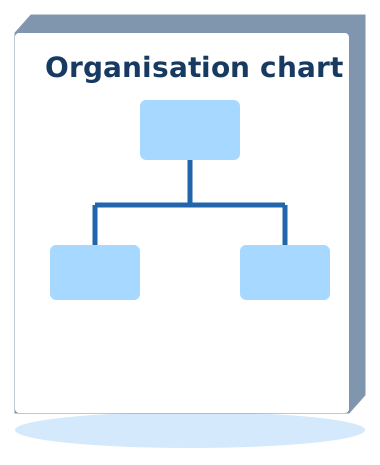
  • An organisation chart record showing one team above two others.

    Organisation chart

    Identifies the teams and their reporting lines.

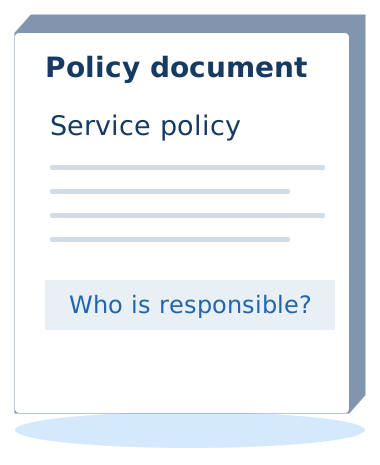
  • A service policy document with a highlighted question: who is responsible?

    Policies and service documents

    Explain who is responsible for what, as the organisation has written it down.

  • A folder of exported records.

    Infrastructure exports

    Supported cloud and datacentre exports describe the systems your teams depend on.

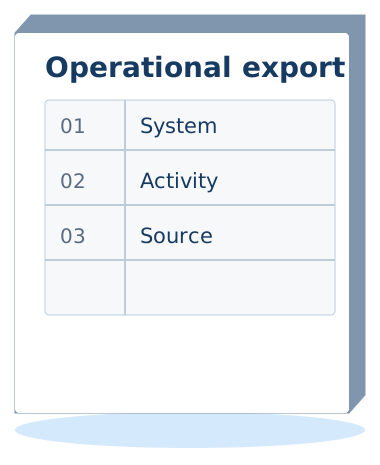
  • An operational export table with numbered rows for system, activity and source.

    Operational records

    Configured connections bring in records of what happened, such as incidents, tickets and workflow runs.

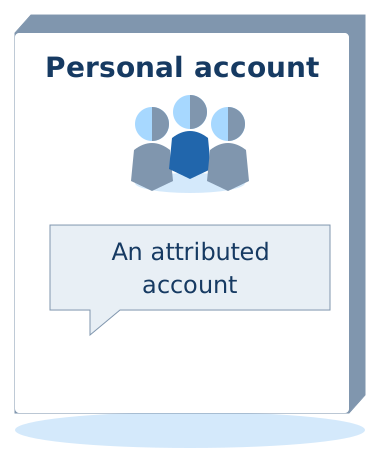
  • A personal account card: a group of people above a speech bubble that reads an attributed account.

    People’s accounts

    People add what they know about their own work, recorded in their name.

How it works

From records to a connected picture

Imports read company files, and configured connections bring in operational records. NovusLens turns structural records into teams, systems and relationships you can inspect. It keeps the supporting evidence beside that picture, so you can return to the source.

04 / Understand the support

Read the label before you read the claim.

Told. Shown. Measured.

Every claim in NovusLens carries an evidence label. The label says what kind of support stands behind the claim, so you can judge how far to rely on it.

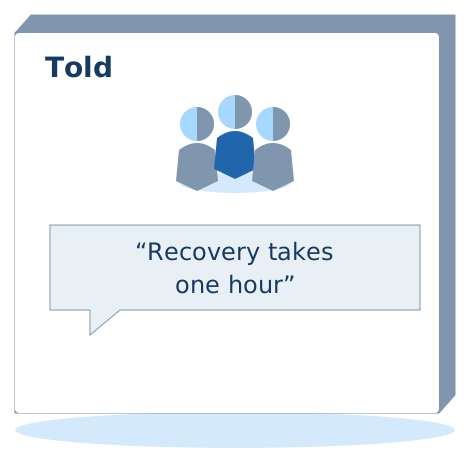
  1. A group of people with a speech bubble: the team’s statement that recovery takes one hour.

    Told

    1 of 3

    Somebody stated it.

    A team says recovery takes one hour.

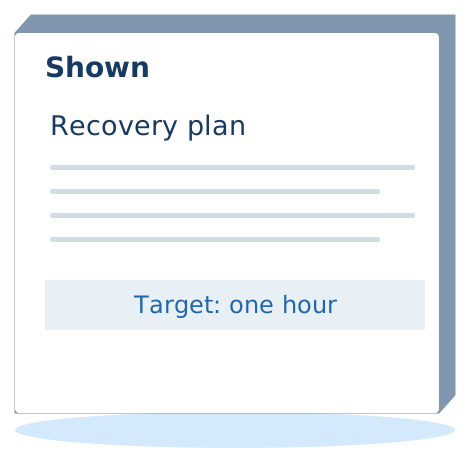
  2. A recovery plan document that states its target: one hour.

    Shown

    2 of 3

    A document supports it.

    The recovery plan states the same one-hour target. It does not show that the target was met.

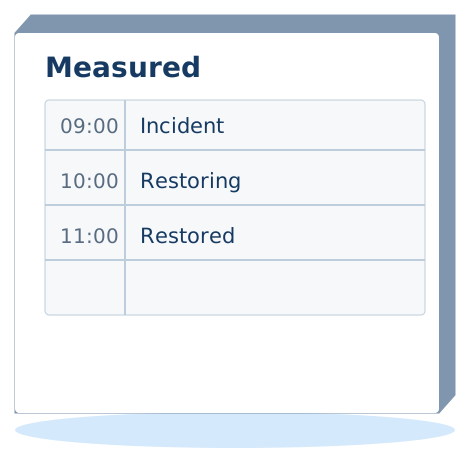
  3. An incident log with three times: incident at 09:00, restoring at 10:00 and restored at 11:00.

    Measured

    3 of 3

    A source recorded an observation.

    An incident record shows that recovery took two hours, on one occasion.

Read each source, its date and what it covers. The label describes support, not certainty.

Every claim your organisation acts on sits on a ladder of evidence.

From the essay Told, Shown, MeasuredRead Told, Shown, Measured (opens in a new tab)

05 / Investigate differences

Turn conflicting accounts into a useful question.

Those different accounts are useful. A recovery target and an incident outcome describe different things, so neither replaces the other. NovusLens keeps both, with their sources, so people can investigate the difference.

NovusLens also surfaces gaps in recorded ownership and disagreements about structure as findings. A finding is an item to review. NovusLens never decides which account is right: the people involved examine the evidence and decide.

Finding

Recovery target and incident outcome differ

Reason
The recovery plan states one hour. The incident record shows two hours.
Recorded owner
The service owner
Sources
Recovery plan (Shown) · Incident record (Measured)
Limit
One recorded occasion. It does not show how often the target is missed.

06 / Keep organisational knowledge

Keep the knowledge behind the decision.

Relationships tell only part of the story. The Knowledge library holds procedures, definitions and written accounts, linked to the teams they concern. For this service change, it can keep the recovery procedure and explain the supplier’s role.

Each entry keeps its author, date and audience. A written account remains its author’s statement, and it can be challenged or withdrawn. Entries can support the answers to questions.

  1. Search

    Find the record, document or entry that mentions a team or service.

  2. Remember

    Keep procedures, definitions and explanations with their authors, so the reasoning outlasts a change of people.

  3. Map

    Work out how teams, systems, suppliers and agents depend on each other, so you can follow a change through them.

Read Search, Remember, Map (opens in a new tab)

07 / Ask a practical question

Take a sourced answer into the discussion.

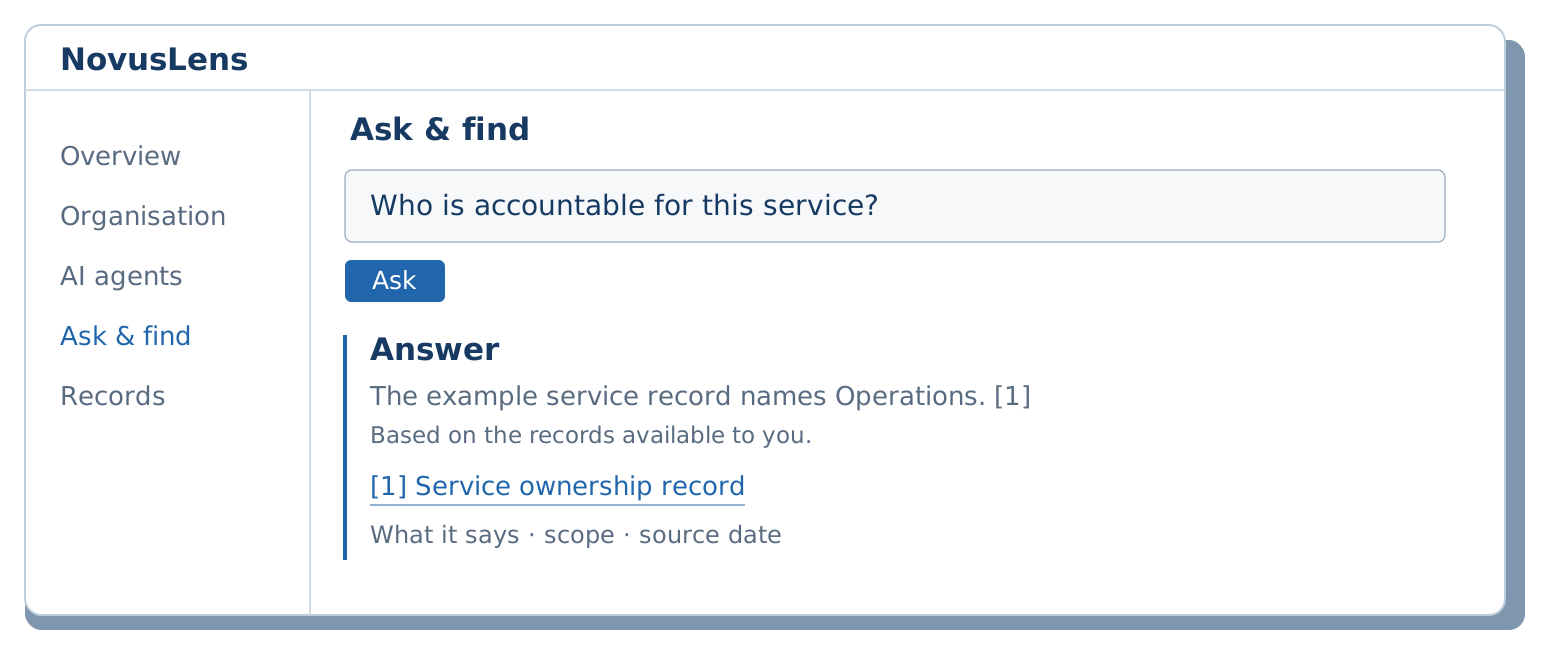
Ask who is accountable for the service, and NovusLens answers from the records you are permitted to see. Each statement links to its sources, and the answer says what it does not establish.

  1. Ask

    Choose the whole organisation or one team, then type your question.

  2. Retrieve permitted records

    NovusLens checks your access and gathers only the records your role can see.

  3. Interpret where needed

    A configured AI model helps interpret the records when the question needs it.

  4. Answer with sources and limits

    Each statement links to its sources. The answer says what it does not establish.

In our example, the answer names Operations and cites the service ownership record. You can bring that record into the discussion, so everyone can see what supports the answer. A generated answer is not an approved decision.

The Ask & find screen in NovusLens. The question “Who is accountable for this service?” has the answer “The example service record names Operations”, with a numbered link to the service ownership record, its scope and its source date.

08 / Assess a possible change

Three separate readings, never blended into one number.

Read the measures alongside their evidence.

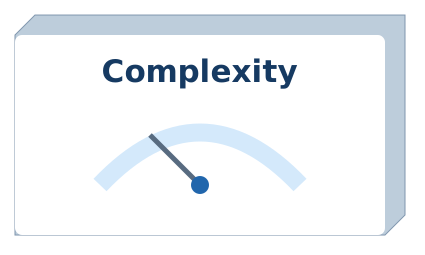
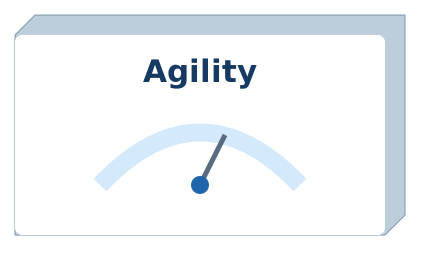
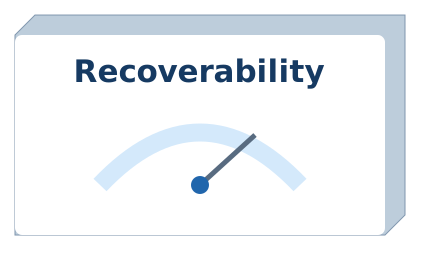
Complexity, Agility and Recoverability (C/A/R) describe the structure of a team or service as it is now. They are measurements, not forecasts, and each follows a written local rule and the evidence available.

  • A gauge labelled Complexity, shown for illustration.
    Complexity

    How much does it have to coordinate?

    Reads the systems a team or service relies on and how tightly they are linked. Tighter links mean more changes to coordinate.

  • A gauge labelled Agility, shown for illustration.
    Agility

    How readily can it change safely?

    Reads how long changes take and how often they fail. Both come from records your organisation already keeps.

  • A gauge labelled Recoverability, shown for illustration.
    Recoverability

    How well does it restore service?

    Reads restoration times and whether recovery has been tested. In our example, the two-hour incident is part of that evidence.

Explore a change before you make it.

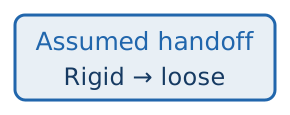
A label on the handoff between two teams: assumed handoff, rigid to loose.

Critical path length is the weight of the longest chain of dependencies in the twin. Each handoff is weighted by how much coordination it needs. NovusLens screens call this figure the dependency-chain index.

Explore a change recalculates the index for one assumed change, such as a looser handoff between Operations and the data team. The comparison helps people discuss trade-offs. It is an index, not an estimate of time or money saved.

A deliberate limit

Structure, never individual productivity

The measures describe teams, services and how they connect. They do not score individuals. A measure is useful only when people trust it and can challenge the account behind it.

09 / Include AI agents

Bring AI agents into the accountability map.

When an AI agent takes on work, someone must answer for its outcome. NovusLens keeps what an agent can do, what it may do and who answers for it as separate records.

  • Capability

    What can it do?

    Understand the capabilities of people, teams, systems and agents.

  • Authority

    What may it do?

    Make decision rights, permissions and operating boundaries explicit.

  • Responsibility

    Who answers for it?

    Connect decisions and findings to accountable people.

NovusLens compares those records with the activity your own systems report. Where ownership is missing or the accounts differ, you have a specific question for the people responsible. Put it to them before assigning more work. NovusLens never runs or controls your agents, and it never issues a compliance verdict.

Related reading

10 / Use the result

From scattered records to a decision brief.

Return to the service change. The affected teams, the supplier and the agent’s owner are now visible, with the records behind each connection.

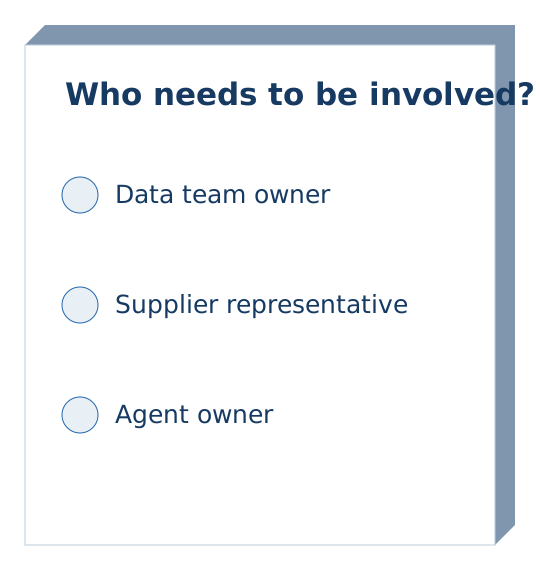
  1. A checklist headed “Who needs to be involved?”, listing the data team owner, the supplier representative and the agent owner.
    Step 1

    See who is affected

    The data team’s owner, the supplier’s representative and the agent’s owner all need to take part.

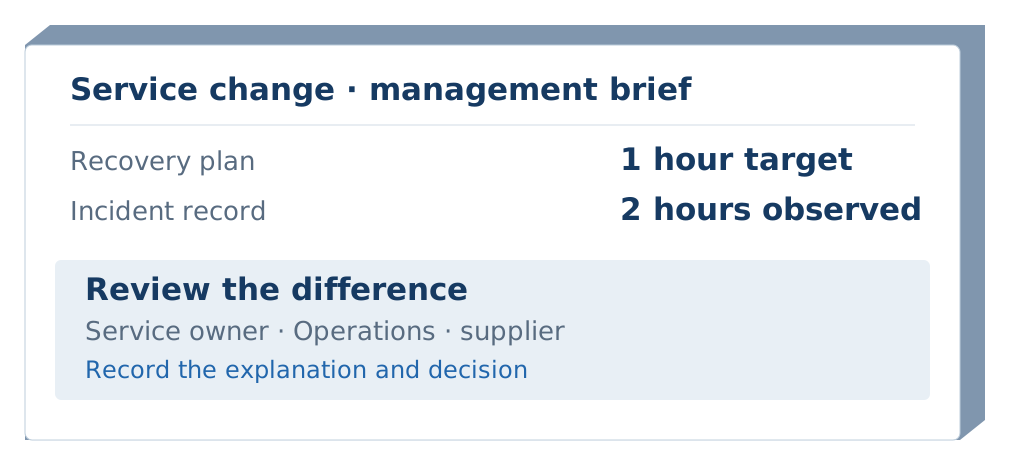
  2. A management brief for the service change. It sets the recovery plan’s one-hour target beside the two hours the incident record observed, and asks the service owner, Operations and the supplier to review the difference.
    Step 2

    Bring a brief

    A management brief sets out the evidence. The recovery plan says one hour. The incident record says two.

  3. A document headed Decision brief.
    Step 3

    Record the review

    The service owner reviews the difference with Operations and the supplier. Everyone examines the same basis, and the decision is recorded with its sources.

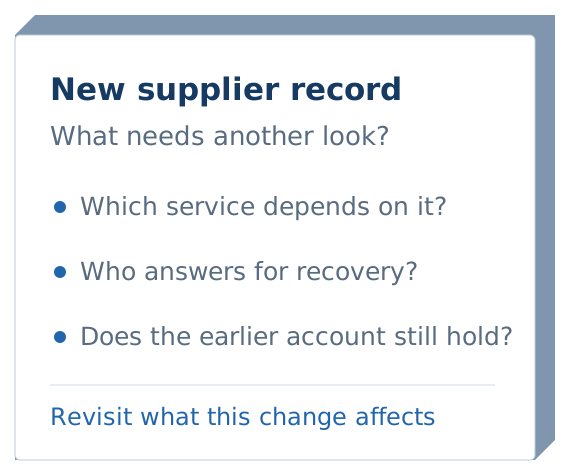
  4. A new supplier record with three questions: which service depends on it, who answers for recovery, and does the earlier account still hold?
    Step 4

    Keep it for next time

    When a new supplier record arrives, revisit the affected relationships beside the earlier review.

The value to your organisation.

  1. See the consequences before committing

    A service change reaches beyond the team leading it. NovusLens shows the recorded dependencies, so you can involve the right owners before the proposal goes to review.

  2. Find where the accounts disagree

    The organisation chart, a team’s own account and a division record can place the same team differently. NovusLens keeps each source distinct, and Novus-i2’s advisers help you examine the date and scope of each. You gain a question to resolve before you rely on the picture.

  3. Keep the understanding you have built

    The decision, its sources and the explanation behind it stay with the twin. When people, suppliers or agents change, the next decision starts from what you already know.

11 / How an engagement works

The route depends on the engagement.
Advisory work usually comes first. The customer often comes to run its own twin, and advisory judgement continues alongside it.Open the diagram on its own (opens in a new tab)

Advisory first, and most often your own twin.

Novus-i2 is the advisory firm. NovusLens is the product we build. An engagement starts with our advisers, who look at how decisions are made and who gains or loses from a change.

Most engagements are designed to end with you running your own twin, on your own infrastructure and from your own records. You keep the records, the Knowledge library and the twin.

Advisory work continues alongside it. Our advisers review what the twin shows, help frame the management question and support the people who must decide.

  • Agentic Readiness Assessment

    Today’s main output: an advisory review of whether your organisation is ready to use AI agents. It covers who may authorise their actions and who answers for the results.

  • Initial Accountability Map

    It can accompany the assessment. It sets out the Capability, Authority and Responsibility recorded for your AI agents.

NovusLens is built in stages: the first has passed our own acceptance checks, and the second is built, with our in-house checks next.

Engagements today are advisory-led, and they move towards you running the twin as the stages are completed.

A demonstration takes about 12 minutes on a working installation of NovusLens. It follows one question through Meridian Grid, a fictional demonstration organisation in which every person, company and source is invented.

12 / Read more

  • The 17 principles behind NovusLens

    The 17 principles shape what NovusLens does and what it refuses to do. Each has a one-line summary and a short explanation.

    Read the principles
  • Product documentation

    The NovusLens documentation explains each concept, the architecture and how to install and run a twin, with films and diagrams.

    Read the documentation (opens in a new tab)
  • A six-part series

    The Self-Sovereign Organisation

    Essays by Dr Richard Nicholson on change, coordination, knowledge, evidence, accountability and who counts in an organisation.

    Read the series (opens in a new tab)

Let’s talk

What needs
to change?

Talk to us about one consequential decision, such as replacing a service, changing a supplier or handing work to an AI agent.

Book a conversation (opens Microsoft Bookings in a new tab)Or contact us directlytyra.suleman@novus-i2.com

Tell us about your organisation and the challenge you are working through.